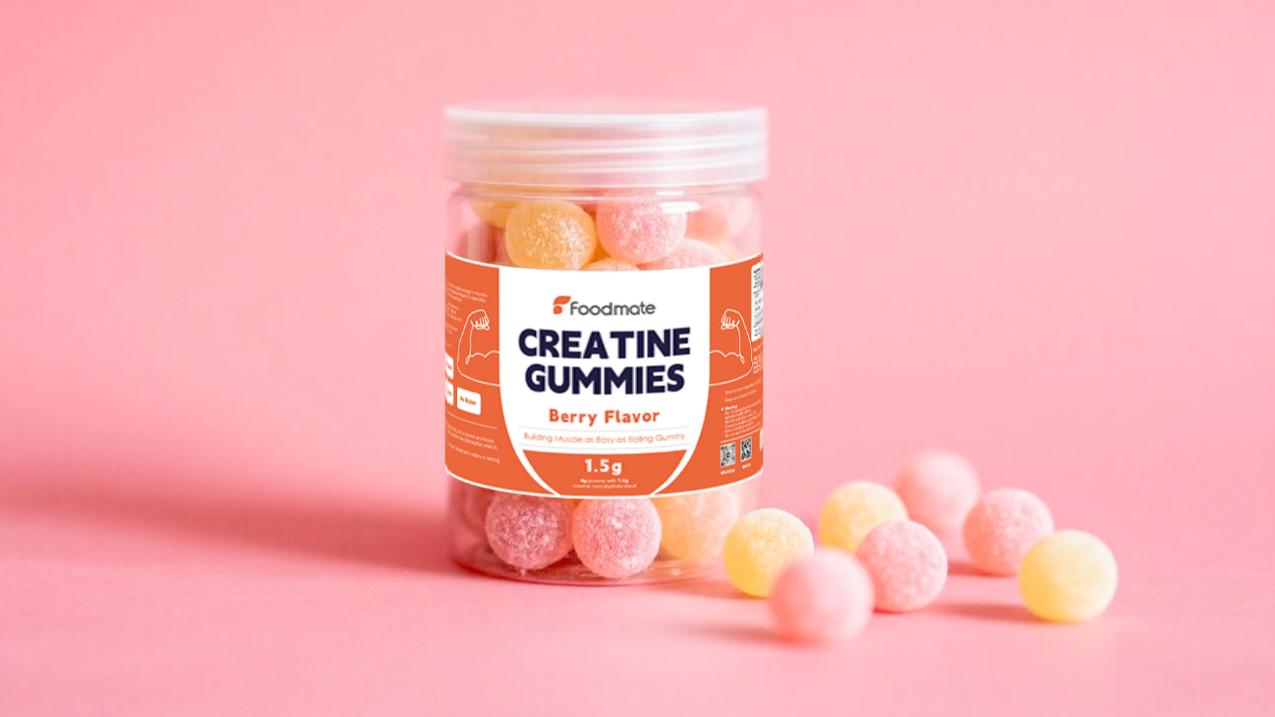
The gummy market has evolved far beyond traditional confectionery.
Today’s consumers are looking for products that deliver more than great taste. Collagen gummies, vitamin gummies, probiotic gummies, and other functional gummies continue to gain popularity, while trends such as reduced sugar, lower calories, and clean-label formulations are reshaping product development. At the same time, these trends are creating new challenges for manufacturers.
At Foodmate, we work with gummy producers developing everything from traditional gummies to nutraceutical and functional gummy products. One issue appears repeatedly during formulation:
A gummy formula that performs well with sucrose often behaves very differently when sugar is reduced or replaced. The result may be gummies that are too firm, lack elasticity, become sticky during storage, lose transparency, or show inconsistent texture.
In many cases, the answer lies in the relationship between gelatin and sweeteners.
-1440x960.jpg)
Sugar Does More Than Provide Sweetness
When people think about sugar, sweetness is usually the first thing that comes to mind. In gummy formulations, however, sugar plays several additional roles. It helps regulate water activity, contributes to shelf-life stability, influences gel formation, and affects the overall eating experience.
Gelatin, meanwhile, creates the three-dimensional network responsible for the characteristic chewiness and elasticity consumers expect from gummies. Because sugars influence how this network develops, the sweetener system can have a major impact on the final texture of the product.
Research shows that when sugar concentrations exceed 50%, gelatin gels generally become firmer and chewier. However, when sugar levels rise above approximately 72%, viscosity can become excessively high, limiting proper gel network development and reducing elasticity.
This is why successful gummy formulation is not simply a matter of adding more or less sugar. The goal is to find the right balance between sweetness, texture, and processing performance.
Why Are Reduced-Sugar Gummies More Difficult to Formulate?
As demand for healthier products grows, many brands are replacing traditional sucrose with alternatives such as erythritol, allulose, and tagatose. While these ingredients help reduce sugar content, they also change the way a gummy system behaves. Water distribution, gel formation, texture development, and even processing conditions can be affected when alternative sweeteners are introduced.
For example, studies have shown that replacing part of a conventional sucrose formula with 6% tagatose and 6% erythritol can produce gummies with good transparency, smooth texture, and acceptable sweetness while significantly reducing calorie content compared with a formulation containing 30% sucrose.
This demonstrates that carefully selected combinations of sugar alcohols and rare sugars can help manufacturers reduce sugar without sacrificing consumer appeal. However, different sweeteners interact differently with gelatin.
As a result, formulators often need to adjust gelatin dosage, bloom strength, and processing parameters at the same time to maintain product quality.
-1440x810.png)
Why Do Some Gummies Become Darker During Processing?
Texture is not the only characteristic affected by sweeteners. The type of sugar used can also influence color and flavor development during manufacturing. During thermal processing, gelatin can react with reducing sugars through the Maillard reaction, producing both color compounds and flavor-active molecules.
Under moderate sugar concentrations, typically between 30% and 50%, this reaction remains relatively mild and gummies usually maintain a light appearance. However, at higher sugar concentrations of around 72%, particularly when water activity falls between 0.6 and 0.8, the reaction can accelerate significantly. In these conditions, gummies may gradually shift from light yellow to darker yellow or even brown tones.
The degree of browning also depends on the sweetener selected. Among commonly used sweeteners, allulose generally shows higher Maillard reactivity than fructose, while fructose is typically more reactive than fructooligosaccharides (FOS). Sucrose, by contrast, is a non-reducing sugar and contributes very little to Maillard browning.
For manufacturers seeking consistent appearance and flavor, understanding these differences can be extremely valuable during formulation.
-1440x720.png)
Can Controlled Maillard Reactions Create Additional Value?
Interestingly, the Maillard reaction is not always a negative outcome.
Recent studies suggest that gummies formulated with allulose, fructose, or FOS may exhibit increased antioxidant activity after digestion compared with formulations based solely on gelatin or sucrose. Among these sweeteners, allulose has shown particularly strong antioxidant potential.
While color development still requires careful control, these findings suggest that properly managed processing conditions may contribute additional functional benefits in certain gummy applications.
-1440x810.png)
Choosing the Right Gelatin for Gummies
As a China gelatin manufacturer specializing in gummy applications, Foodmate frequently helps customers optimize texture, elasticity, processing efficiency, and product stability.
One common misconception is that adding more gelatin automatically creates a better gummy. In reality, the optimal gelatin level depends on the desired texture profile. As a general guideline:
- Soft gummies typically use around 5% gelatin
- Standard elastic gummies often use around 7% gelatin
- High-chew gummies may require 8% or more
(Adjust according to the gelatin specifications)
Excessive gelatin usage can increase firmness, but it may also create an overly tough texture that reduces consumer acceptance. For this reason, many manufacturers are moving beyond single-gel systems and exploring hydrocolloid combinations.
Research has demonstrated that a formulation containing 5% gelatin, 0.1% gellan gum, and 0.4% locust bean gum can improve thermal stability and acid tolerance while maintaining desirable transparency and elasticity.
The most effective solution is often not more gelatin, but the right gelatin combined with the right supporting ingredients.
Beyond Traditional Gelatin: Building Better Gummies
As gummy products become more sophisticated, ingredient systems continue to evolve. Today’s manufacturers must balance texture, stability, active ingredient compatibility, processing efficiency, and cost performance—all within a single formulation.
To support these challenges, Foodmate offers customized texture solutions for gummy manufacturers, including gelatin, instant gelatin, carrageenan and collagen.
Depending on the product concept, our technical team can help evaluate texture targets, processing requirements, ingredient compatibility, and formulation goals to identify the most suitable hydrocolloid system.
Whether the objective is a traditional confectionery gummy, a reduced-sugar gummy, or a functional nutraceutical gummy, selecting the right ingredient system remains one of the most important factors behind product success.
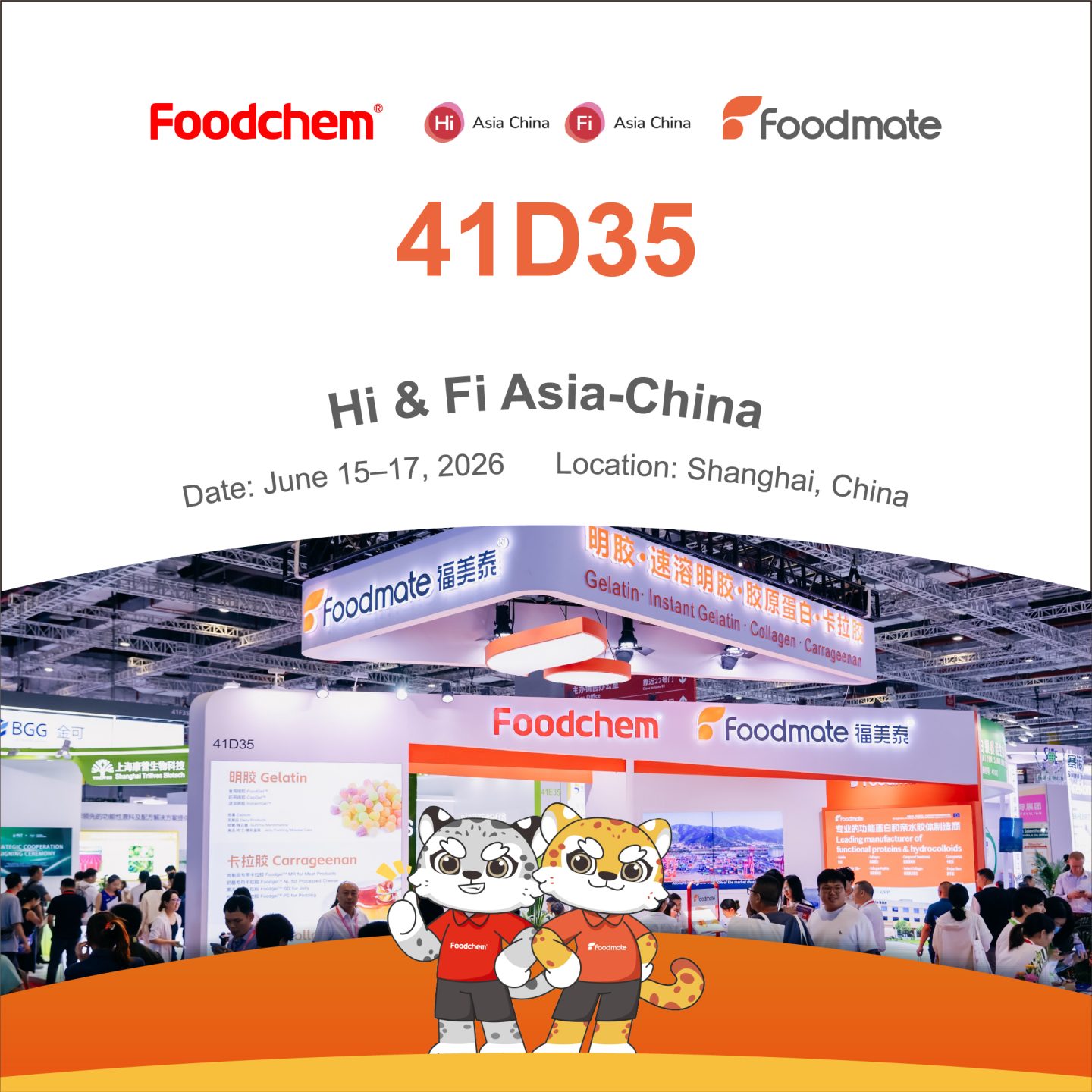
Meet Foodmate at Hi & Fi Asia-China 2026
If you are developing gummy products or exploring new approaches to reduced-sugar formulations, we invite you to visit Foodmate at Hi & Fi Asia-China 2026.
Date: June 15–17, 2026
Booth: 41D35
Meet directly with our technical specialists to discuss:
- Gelatin and sweetener interactions in gummy systems
- Foodmate’s gummy gelatin solutions
- Other hydrocolloid solutions for functional and reduced-sugar gummies
- Receive gummy-specific gelatin samples for evaluation and product development
We look forward to meeting you in Shanghai and exploring new possibilities for gummy innovation together.
-scaled.jpg)
.jpg)